
Service model redesign Empowering corporate venture capital teams in finding their next innovation partner
About
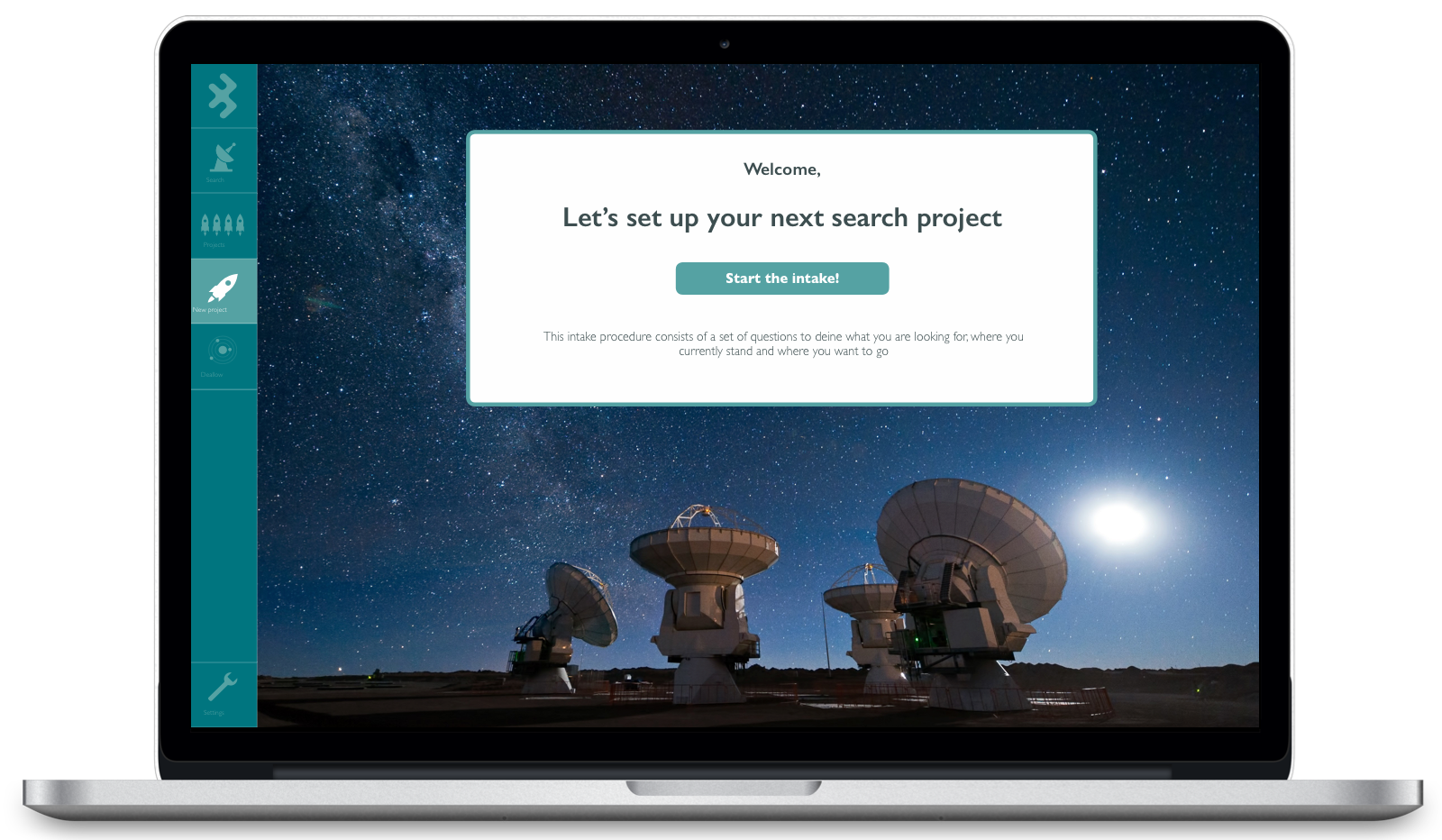
Large firms are increasingly looking at startups and scale-ups to accelerate their innovation activities. This project set out to design a platform and service model for Venture IQ, a company that uses data to help large firms find their next innovation partner.
Venture IQ was founded by former VCs in August 2015 and has helped 50+ drive better results over their investment portfolio. They advice clients through a focused and iterative search process, and develop an in-house data driven platform, called Catalist, as a tool for analysts and client stakeholders.
My role as Technology Analyst at Venture IQ included technology scouting, market research, user research, innovation strategy, and client facing consultancy.

Service Design
The main challenge during the project was to create a new service model for Venture IQ that focuses on the benefit in Catalist, their collaborative data platform.
The new service model incorporates a bunch of new features to ensure that clients are using the platform efficiently, thus lowering the pressure on Venture IQ’s analysts and consultants.

Analyst Toolkit
With the redesigned service system comes a set of tools that analysts can use to improve their workflow and generate even better results for clients. A large aspect of the redesign of Venture IQ’s service lies in features that stimulate interaction and collaboration. The first step, though, is always to get a thorough understanding of what the client’s knowledge is and what they think they are looking for.

Project Type Identifier

Project Wheel

Workflow Sheet

Enhanced Interactions

Process
At the core of this project lies the discipline of design thinking, a design method at the intersection of people, technology and business. It aims to meet people’s needs through human-centered research, and build technologically feasible products and services with a viable business strategy.
The world of corporate venture capital and technology scouting services in particular is a business-to-business environment. In this area the importance of user needs is often overlooked, and this is where design thinking methodology is well suited for solving problems and creating meaningful products and services. This project maintains a human-centered research and design approach and aims to create meaningful solutions for people, and therefore, their organizations.
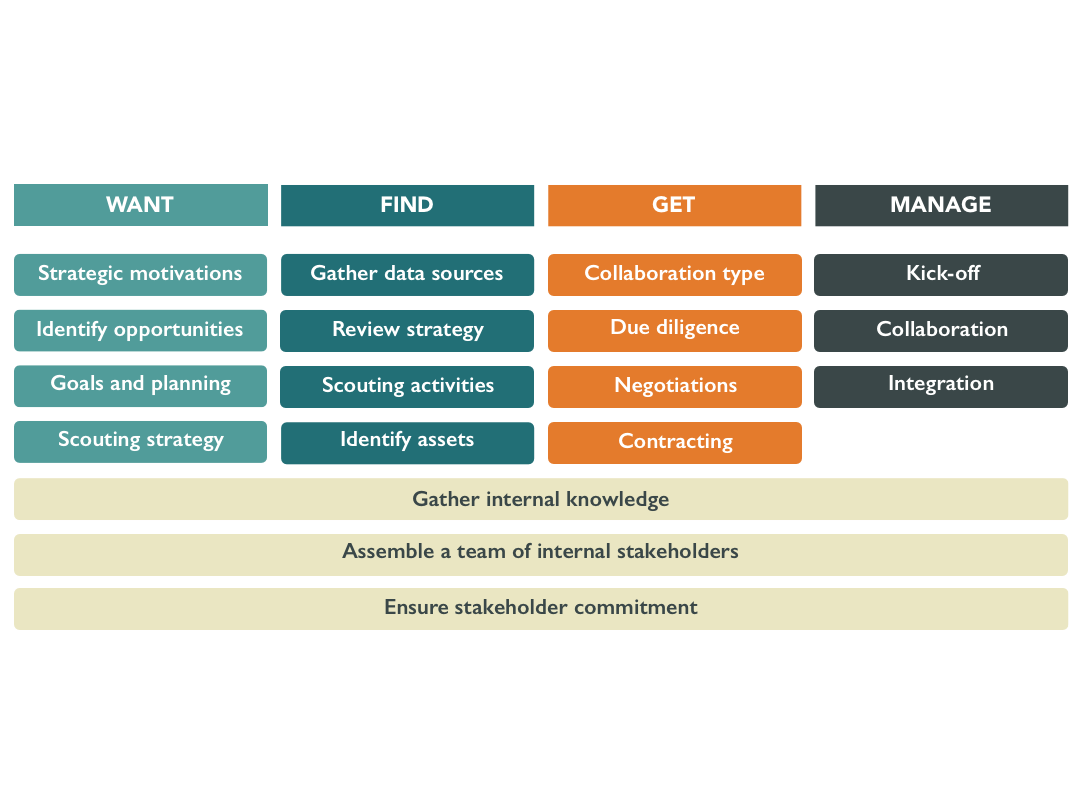
This project builds on the three phases of design thinking: Inspiration, where the context is investigated and problems and opportunities are identified, Ideation, where solutions are synthesized, and Implementation, where solutions are put into practice.


Inspiration
The inspiration phase started out by discovering the context of corporate venture capital, open innovation and how strategic partnerships are established. A literature review and customer analysis are performed to uncover the needs and desires that people in corporate venturing roles want answered. Based on this initial discovery two sets of research questions were formulated.
The insights obtained during the discovery of the context and company, as well as the analysis of 9 case studies were clustered and summarised, forming the input for the design brief. This document states the problems and opportunities and acts as the foundation for the ideation phase.
Ideation
The design brief is taken into ideation sessions with the client firms’ teams. From these ideation sessions three concepts were created, which were tested with the criteria stated in the design brief. One concept was selected and iterated on. The outcome is a redesign of Venture IQ’s service model with a more central role for the product.


Implementation
An implementation plan was created, along a roadmap that defines the introduction of a new service model in parallel with software developments.
Case studies
To gain deeper insights into the client facing processes at Venture IQ, a series of exploratory case studies was conducted. The foundation for these case studies was a conceptual typology of project types: Explorative searches, Market searches and Technology searches.


